How Licensing Frameworks Influence Content Variety Across Regional Digital Gaming Portals
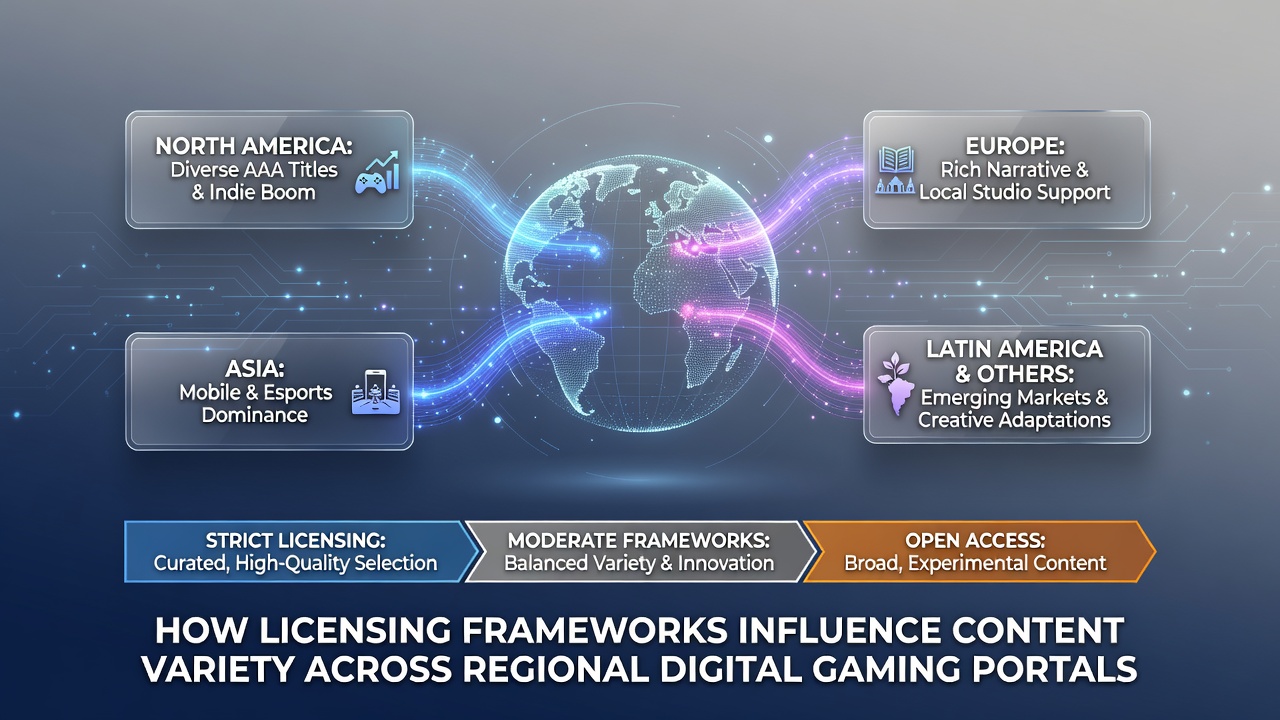
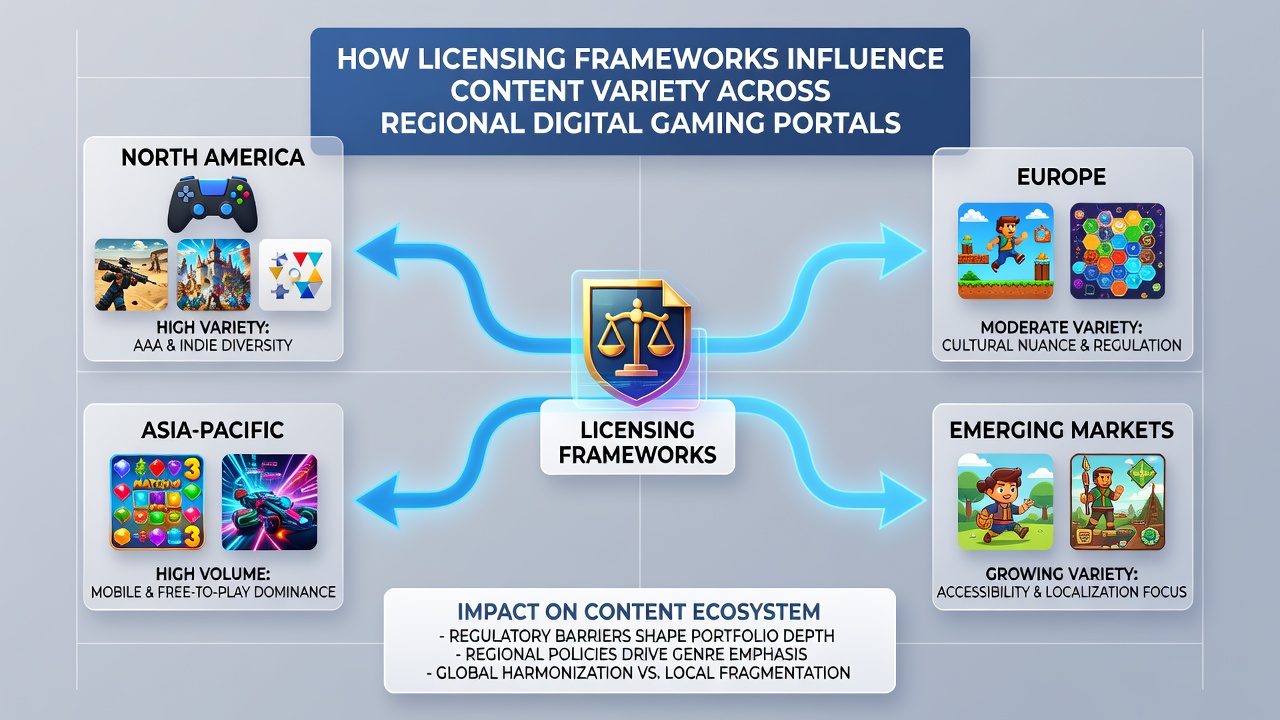
Regional digital gaming portals operate under layers of licensing requirements that directly determine which titles appear in local catalogs, and these rules create noticeable differences in available games from one market to the next. Licensing frameworks set by government agencies and industry bodies establish age ratings, content restrictions, and distribution approvals that publishers must secure before launching products in specific territories. Data from industry reports shows that portals serving Europe often carry broader selections of mature-themed games compared with those in parts of Asia where stricter moral guidelines apply, while North American platforms balance federal and state-level rules that shift inventory on a regular basis.
Core Components of Licensing Systems
Licensing systems combine classification standards with commercial permits, and each element controls what reaches end users through storefronts and subscription services. Classification boards evaluate violence, language, and thematic elements before assigning ratings that portals then use to filter recommendations and search results. Commercial permits, issued by communications or finance ministries in many countries, require platforms to demonstrate compliance with local tax and consumer-protection statutes, which in turn influences how many independent developers gain shelf space. Observers note that portals update their libraries quarterly to reflect new approvals, yet delays in one region can leave popular releases absent for months while neighboring markets enjoy immediate access.
Geographic Differences in Approved Content
European portals governed by PEGI standards tend to approve titles faster than counterparts following more segmented national procedures, allowing simultaneous launches across multiple countries. In contrast, markets with centralized content review boards often require separate submissions for each language version, extending timelines and reducing day-one variety. Researchers tracking release patterns have documented that games featuring historical or political themes encounter additional scrutiny in certain Asian jurisdictions, resulting in edited versions or outright exclusions that shrink catalog depth. North American services navigate a patchwork of state laws on loot-box mechanics and gambling elements, which forces providers to maintain parallel builds and region-locked features that further fragment user choices.
Impact on Independent Developers and Catalog Depth
Independent studios face higher barriers when licensing frameworks demand extensive localization or separate compliance audits for each territory. These costs encourage many smaller teams to prioritize larger markets first, leaving regional portals with fewer niche or experimental titles. Industry analyses reveal that platforms in Australia and Canada have expanded their indie sections after streamlining certification pathways in recent years, yet similar reforms remain pending elsewhere. Portals that partner with multiple regional licensors gain access to wider libraries, and this strategy has become common among major subscription services seeking to maintain competitive variety ahead of seasonal updates.
Regulatory Updates Scheduled for Mid-2026
Several jurisdictions have announced licensing revisions slated to take effect in June 2026, and these changes are expected to alter content availability on major portals. Revised classification criteria in parts of Southeast Asia will introduce new review categories for online multiplayer interactions, potentially delaying launches of cooperative titles until developers complete additional documentation. European regulators plan to align digital distribution permits more closely with updated consumer-data rules, which may require portals to re-certify existing catalogs and temporarily reduce visible inventory during transition periods. Market participants anticipate that these adjustments will create short-term gaps followed by expanded offerings once compliance stabilizes.
Platform Strategies for Managing Regional Restrictions
Portal operators respond to licensing constraints by deploying geo-specific storefronts and dynamic filtering tools that hide unavailable titles from unauthorized regions. Some services maintain unified global backends while presenting tailored front ends, a tactic that preserves operational efficiency without violating local rules. Partnerships with local publishers allow foreign developers to bypass certain direct-application hurdles, and this model has increased content variety in markets where standalone licensing proved cumbersome. Tracking data indicates that portals adopting hybrid compliance teams experience fewer release delays and maintain steadier catalog growth compared with those relying solely on external legal counsel.
Conclusion
Licensing frameworks continue to shape the boundaries of content variety across regional digital gaming portals through classification standards, permit requirements, and staggered approval timelines. As updates scheduled for June 2026 approach, platforms and developers alike adjust strategies to accommodate new criteria while preserving access for their core audiences. The interplay between regulatory demands and commercial distribution decisions determines which games reach which players, creating an evolving map of availability that shifts with each policy revision.